

SCAR THERAPY TREATMENTS
Individual Treatment for You and Your Scar
Your scar may feel tight, sensitive or uncomfortable, affect movement, or concern you because of its appearance. Your appointment begins with understanding these concerns, your healing history and what you would like help with.
Following an assessment, I’ll explain the findings and discuss suitable treatment options. I use Restore Scar Therapy alongside other physiotherapy techniques, selecting and adapting the approach to your needs and comfort.
You won’t necessarily need every treatment described below.
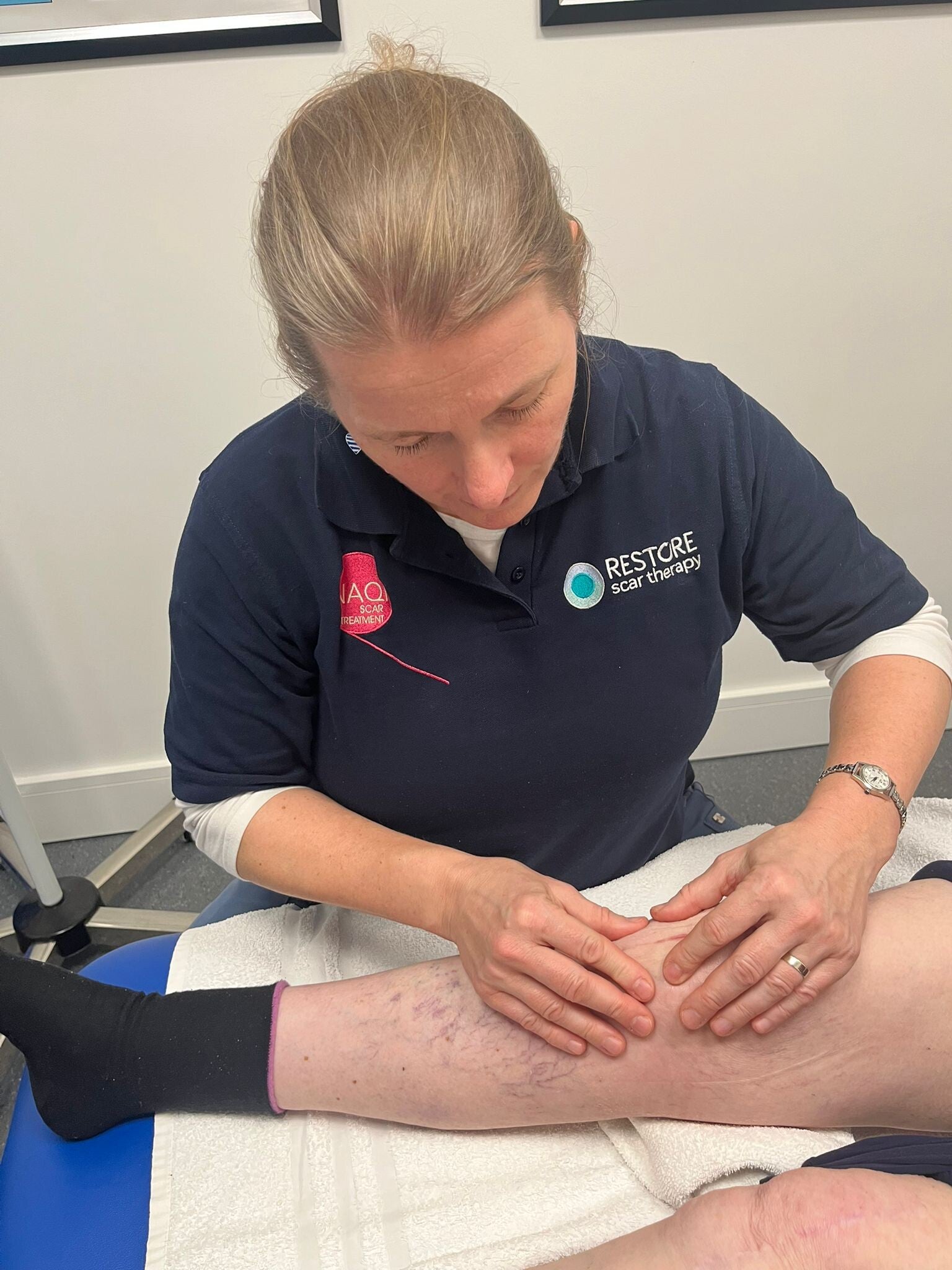
RESTORE SCAR THERAPY METHOD
Restore Scar Therapy forms the foundation of my approach to scar management. It combines very gentle hands-on techniques with current research and clinical experience, with the aim of improving comfort, tissue mobility and function.
Gentle treatment can be effective without forceful pressure. Techniques may include small movements of the skin, lifting and stretching, always adapted to your comfort and the response of the tissues.
A thorough assessment guides the treatment. Rather than following a fixed routine or using the same techniques for everyone, I consider your healing history, how your scar feels and moves, and what you would like help with. This informs the choice, location and amount of treatment.
Throughout the session, I reassess your response and adjust the approach where needed. Your feedback is an important part of this process, helping us keep treatment comfortable, relevant and focused on your goals.

NEGATIVE PRESSURE THERAPY
Negative-pressure treatment uses suction to lift the skin and underlying soft tissue. I may use silicone cups or a specialist device where appropriate as part of your treatment.
Unlike techniques that press into the tissue, this approach applies a lifting force. It may be considered when assessing and treating areas of reduced tissue movement.
You may feel a lifting or pulling sensation. The amount of suction and the way it is applied are adjusted to your comfort, skin condition and stage of recovery. This approach is not suitable for every scar.

INSTRUMENT ASSISTED TECHNIQUES
Instrument-assisted soft tissue mobilisation, often shortened to IASTM, involves using a smooth handheld tool to apply controlled contact and movement to the skin and soft tissues.
I also use vibrating tools and tuning forks to introduce gentle, localised vibration to the scar and surrounding tissues.
Emerging research and clinical reports are exploring vibration in scar rehabilitation, including its potential role in managing discomfort and supporting movement.
I may use this alongside manual techniques, depending on your assessment and the area being treated. The pressure and movement are adapted to your comfort, with your response guiding the treatment.

KINESIO TAPING
Kinesiology tape is a flexible adhesive tape that can be applied in different ways over or around a scar.
Where appropriate, I may use it alongside hands-on treatment and movement advice. I’ll explain the purpose of the application and discuss whether it is suitable for your skin and daily activities. The kinesiotape is used to help off-load the scar or might use it to stimulate change in older mature scars.
If tape is used, you’ll receive guidance on wearing it, checking your skin and removing it. Please let me know if you have sensitive skin or have previously reacted to adhesives.

MOVEMENT AND REHABILITATION
Scar assessment may include looking at how you move and which activities feel restricted or uncomfortable.
As a physiotherapist, I can incorporate relevant movement, exercise and rehabilitation advice into your care. This might involve working towards a particular daily activity, returning to exercise or improving confidence using the affected area.
Together, we’ll identify practical goals and choose exercises that fit into your daily routine. Your programme can be adjusted as you progress, with guidance to help you practise confidently between appointments.
The programme will reflect your wider recovery needs, including any precautions following surgery or injury.

TOPICAL PRODUCTS & SELF-CARE
Knowing how to look after your scar between appointments is an important part of your care.
Depending on your needs, we may discuss:
- Appropriate touch or self-massage.
- Movement and exercises.
- Moisturising and skin care.
- Silicone gels or sheets, where relevant.
- How to monitor your response and when to seek further advice.
You do not need to purchase specialist products before your appointment. If you already use something on your scar, you’re welcome to bring it along so we can discuss it.
Chosing the right approach
Treatment decisions are made with you, taking into account your symptoms, healing history, skin condition and goals. We’ll review your progress and adjust the plan where needed.
If your concerns would be better addressed by another healthcare professional, I’ll discuss this with you.